
"Brazil coffee supply"
1000 article(s) found

Brazil will produce 47.54 million bags of coffee this year.
At the International Coffee week, which opened on the 9th, the Brazilian National supply Company predicted that as the world's largest coffee producer, Brazil's coffee production will reach 47.54 million bags (60 kilograms each) in 2013, down 6.46 percent from the previous year. The main reason for the decline in coffee production in Brazil this year is that this year is in the small year of the biennial coffee production cycle. However, the Brazilian National supply Company is still

Brazil's drought continues, the yield of raw coffee beans is worrying in the next season, and farmers give up growing coffee.
Coffee turns to grain according to a report by Reuters on Aug. 24, Brazilian farmers' coffee fields have suffered heavy losses after the worst frost in 27 years, and some of them plan to clean up coffee plants withered by frost in the fields. Switch to cereals. Growing soybeans and corn is one of the most profitable farming methods in Brazil. With coffee, which has been cultivated for many years
The reduction in overseas production has led to a big increase in exports. Yunnan Coffee and beans are soaring in quantity and price.
Affected by extreme weather, the global supply and demand of coffee beans, the raw material of coffee, has been challenged this year. Multi-party data show that due to the main producing areas of coffee beans, such as Brazil, affected by drought, diseases and insect pests and other factors, coffee bean production has dropped sharply this year, resulting in coffee beans in short supply and prices showing an upward trend. At present, it has also entered the picking season of domestic coffee beans. Yesterday (November 25), coffee in Yunnan Province
New York Futures: Arabica coffee futures rise on expectations of global supply shortages
New YORK / London (Reuters)-ICE Arabica coffee futures rose on Friday as an industry body expected global supply shortages due to a drought in Brazil and a stronger real. ICE raw sugar futures closed flat, while cocoa futures fell, hurt by abundant supply of new works in West Africa. ICE- March Arabica Coffee Futures (KCc2) closed up $1.85
Factors affecting the price increase of coffee futures
Coffee futures trade coffee beans, and futures are both an investment and an increase in coffee. The increase in coffee lies not only in the origin, good or bad, but also for many piecemeal reasons. In the coffee futures market, the main factors affecting the price of coffee beans can be summarized as follows:

Brazilian Coffee prices soar is Brazilian Coffee expensive
Professional coffee knowledge exchange more coffee bean information Please pay attention to the coffee workshop (Wechat official account cafe_style) generally speaking, in the coffee supply chain, coffee growers have the lowest carbon emissions, while transportation, roasting and sales are the largest. However, because coffee cultivation requires specific climatic conditions, coffee growers have become the most directly and seriously affected in the supply chain.
The price of coffee and beans in China showed an upward trend in 2014.
Affected by extreme weather, the global supply and demand of coffee beans, the raw material of coffee, has been challenged this year. Multi-party data show that due to the main producing areas of coffee beans, such as Brazil, affected by drought, diseases and insect pests and other factors, coffee bean production has dropped sharply this year, resulting in coffee beans in short supply and prices showing an upward trend. At present, it has also entered the picking season of domestic coffee beans. Yesterday (November 25), coffee in Yunnan Province

Strong demand affects Cooperative Bank to raise shortage forecast of coffee market
Agrimoney.com reported on May 22nd that the latest report of the Dutch Bank of Cooperation (Rabobank) raised its supply shortage forecast for the global coffee market in 2013 by 1 million packets (60 kg each), mainly due to strong demand. The bank also said that in view of the upward forecast of supply shortage in the coffee market, coffee prices will be more sensitive to weather conditions in Brazil, the largest producer.
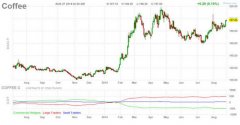
Chaotic weather in Brazil makes coffee futures soar 77%.
The continuing drought has hit Brazil's coffee industry hard. However, the weather is likely to be even worse next year, when Brazilian coffee production will fall for the first time since 1965 for three consecutive years. On Wednesday, Bloomberg News quoted the Brazilian National Coffee Council as saying that Brazilian coffee bean production would fall 18% to 40.1 million bags at the end of the harvest season next month. Each bag is 60 kilos. Last year's production

Coffee bean futures hit the biggest increase in a single day for half a year this year may be in short supply
Coffee beans have been falling all the way this year, due to rain in Brazil, but yesterday (16) ICE Arabica coffee beans fell 6.4% to 138.05 cents per pound, the biggest single-day decline since October last year. According to the report of "MarketWatch", the coffee bean season has been down for six consecutive months, but only in February.

Coffee Information Coffee production in Brazil has fallen sharply. Yunnan Curry Farmers hoarding goods is bullish.
Recently, the news on Weibo that the global supply of coffee beans has shrunk sharply and coffee prices will rise all the way has attracted everyone's attention. Some netizens who usually like to drink coffee say they want to buy some coffee beans to store them, while others think that Yunnan farmers can finally get a higher annual income. According to the data, Brazil is the world's largest supplier of coffee beans with a 40% market share.

Brazilian coffee bean grade characteristics and story Brazilian coffee bean import and export data
Professional coffee knowledge exchange more coffee bean information Please follow the coffee workshop (Wechat official account cafe_style) those who are familiar with Brazilian coffee must know that Brazil not only has high-quality fine coffee, but also is an indispensable basic bean in many blended coffees. The most important feature of Brazilian coffee is calm, so that people do not have to have too much burden on bitterness and sour taste, and the entrance is smooth.

Arabica coffee bean supply shortage Arabica coffee bean futures price continues to rise
For more information on coffee beans, please follow the coffee workshop (official Wechat account cafe_style). According to Bloomberg, the futures price of Arabica coffee beans is soaring amid signs that Arabica coffee beans will be in short supply in 2021. Citigroup analysts said that due to declining production forecasts for Arabica coffee beans in Brazil, Marex

There may be an imbalance between supply and demand for coffee in the world in 2021, so it is difficult for coffee prices to rise further.
Professional coffee knowledge exchange more coffee bean information Please follow the coffee workshop (Wechat official account cafe_style) for the global agricultural market, prices may be stable in the first half of the year and weak in the second half of 2021. But coffee will be an exception! Over the past five years, global coffee consumption has increased by about 2 per cent year-on-year. The emergence of COVID-19 in 2020 and related system limits

Heavy rain + drought Brazil chaotic weather makes coffee futures soar 77%
Continued drought hits Brazil's coffee industry hard. Next year, however, the weather could be even worse, when Brazilian coffee production falls for three consecutive years for the first time since 1965. Brazil's coffee bean production will fall 18 percent to 40.1 million bags after the harvest season ends next month, Bloomberg News reported Wednesday, citing forecasts from Brazil's National Coffee Council. Each bag weighs 60 kg. last year's crop
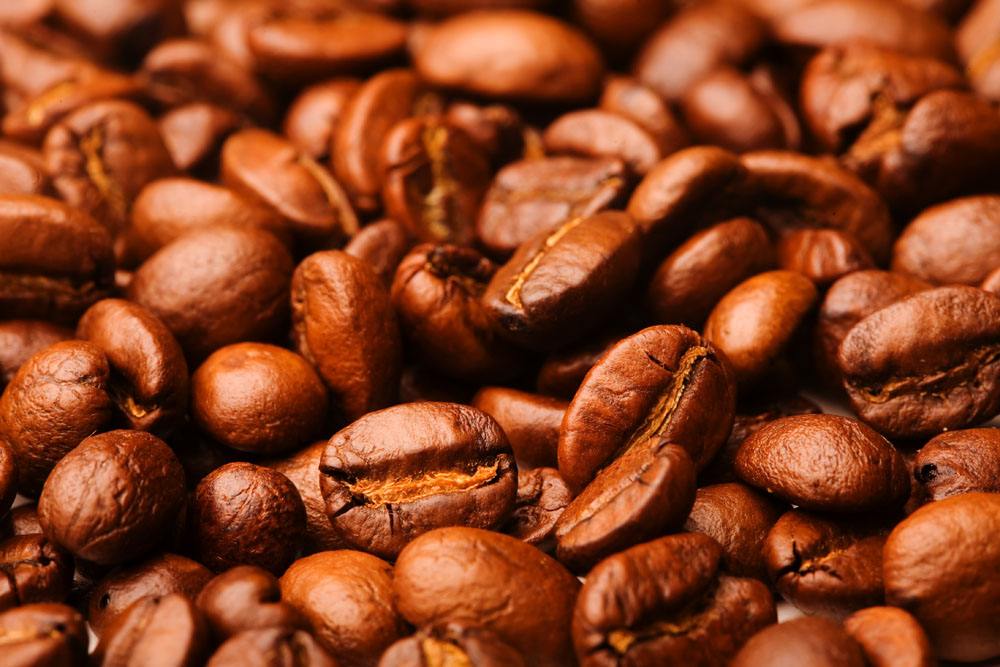
The price of Brazilian coffee beans and how to import Brazilian coffee beans
Following Cafe Review (official Wechat account vdailycom) found that the Cafe Beautiful Cafe opened a small shop of its own, the price of Brazilian coffee beans supply one-third of the global coffee demand, but the coffee harvest in Brazil in 2014 was the worst in three years. Coffee prices rose further, once rising above US $2 per pound, and large coffee chains such as Starbucks quickly followed suit to raise the price of coffee drinks. Coffee

Coffee crisis │ Coffee supply chain collapse warning
Coffee supply chain collapse warning Why Sustainable farming is closely related to you and me Professional baristas Please pay attention to Coffee Workshop (Wechat official account cafe_style) most coffee beans are produced in poorer developing countries in the southern hemisphere and are mainly supplied to rich developed countries in the northern hemisphere. The coffee world is changing due to climate change, according to the latest coffee from the U.S. Bureau of Agriculture (USDA).

Brazilian coffee frost frost recovery and yield fluctuation of Brazilian coffee trees
With the development of new technology, the news of Brazilian coffee cream spread all over the world in a few minutes. Accordingly, coffee prices usually rise due to expectations of a global coffee shortage. Brazil produces nearly 25 million bags of 60 kilograms of coffee. This accounts for about 25% of the world's supply. Frost has a far-reaching effect because it can reduce or completely eliminate most of the world's supplies in one day.
Coffee futures American type C futures Arabica coffee bean price trend quotation contract latest news
The American coffee bean futures business began with the New York Coffee Business in 1882, which added sugar futures contracts in 1916 and changed its name to New York Coffee and Sugar Trading. It was not until 1979 when it merged with the New York cocoa business that it became known to the giants as the New York coffee, sugar and cocoa business.
Increased consumption in Africa leads to tight supply of coffee
Brazil, the world's largest exporter of coffee, has suffered a decline in coffee production due to a severe drought, while local consumption of coffee in Africa, another major source of coffee exports, continues to grow, leading to a continuing strain on global coffee bean supply.